
Pipe Expansion Joints
Pipe Expansion Joints & Pipework Expansion Bellows
Protect pumps, vessels, and anchored pipe runs from thermal growth, vibration, and installation misalignment with engineered pipe expansion joints.
Risk
Piping Stress Shows Up at the Nozzle First
When growth and vibration are not absorbed in the line, equipment flanges and anchors fail first — often during the first heat-up cycle.
Nozzle overload
Pumps and exchangers see forces the bellows or elastomer should have taken.
Missing guides
Without anchors/guides defined, even a correct joint underperforms.
Wrong pressure class
HVAC rubber on steam duty — or metal where vibration isolation was needed.
End mismatch
Flange facing and drill pattern not aligned to the plant standard.
Flange match
ASME, EN, and project drill patterns aligned to your plant standard.
Thrust control
Tie rods and hinges where pressure thrust must be managed.
Liners
Flow liners and covers for abrasive or high-velocity service.
Testing
Leak and pressure tests per agreed ITP before shipment.
Pipework Solutions
Pipework Solutions by Duty
Choose by pressure, temperature, and whether the problem is thermal growth or vibration.
Compare
Piping Selection Snapshot
| Option | Typical duty | Movement | Connection | Notes |
|---|---|---|---|---|
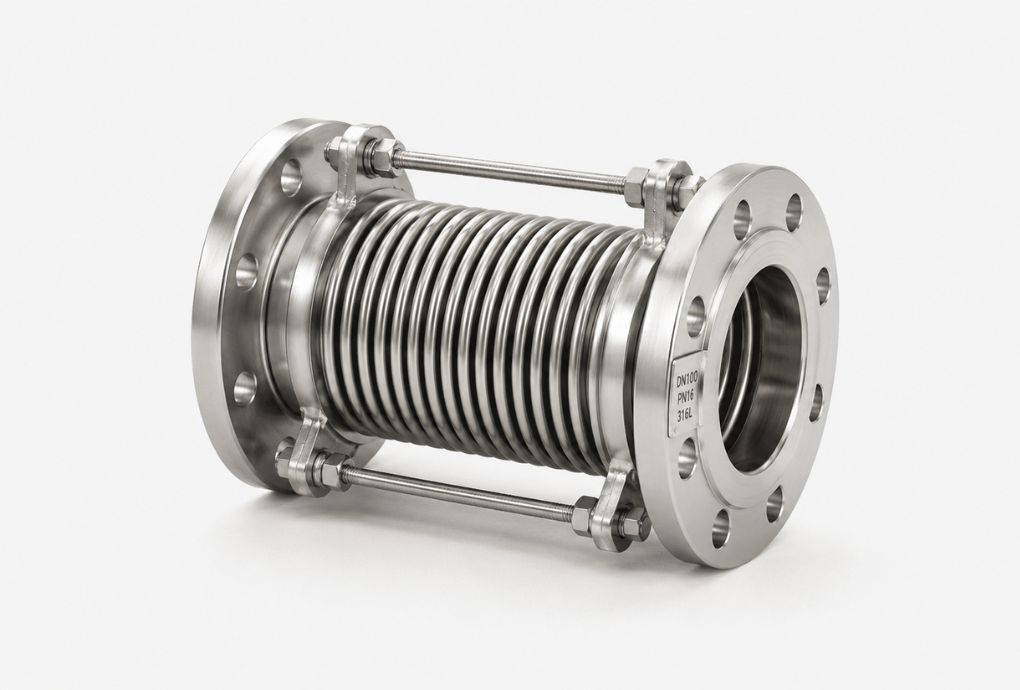
| Metal bellows | Steam / hot oil | Axial+lat+ang | Flange / weld | EJMA-style design |
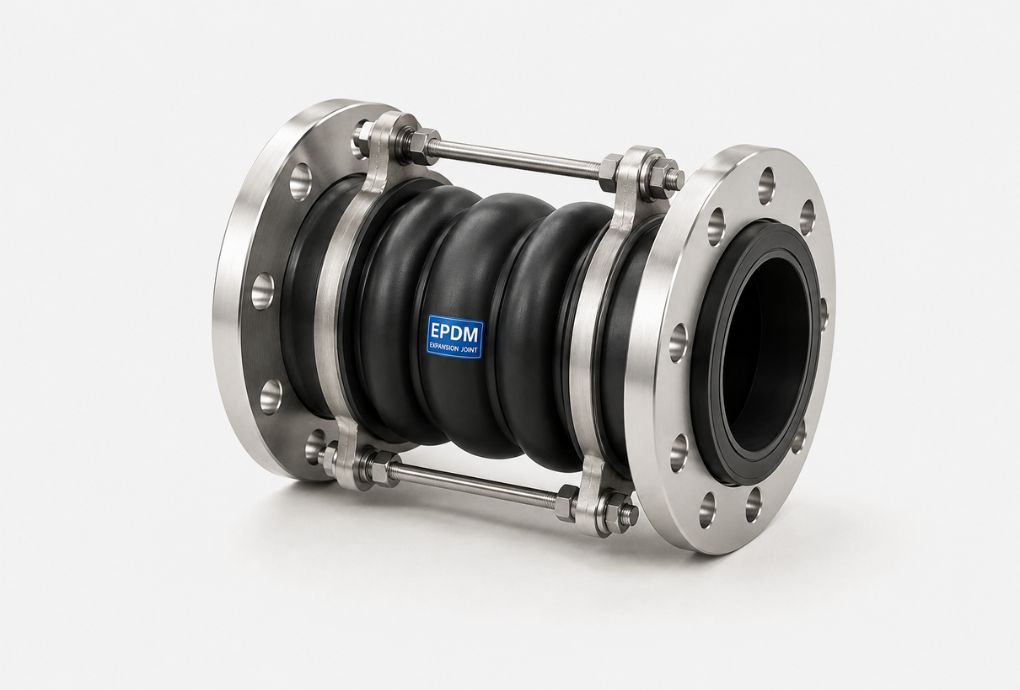
| Rubber | Pumps / HVAC | Lat + vib | Flange | Media limits apply |
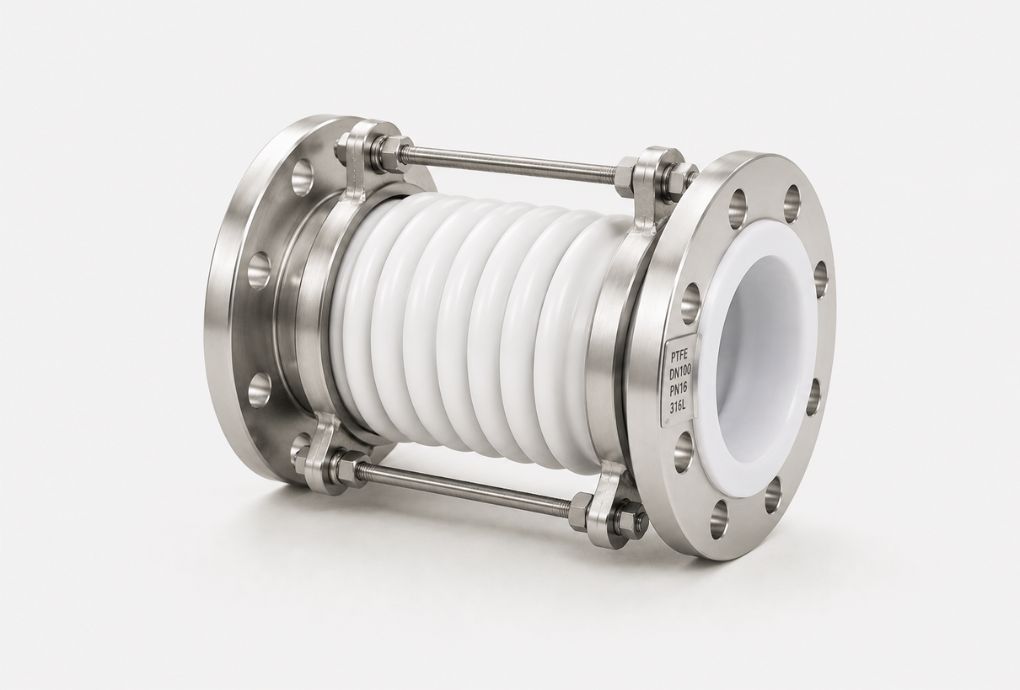
| PTFE | Acids / solvents | Axial+lat | Flange + tie rods | Vacuum options |
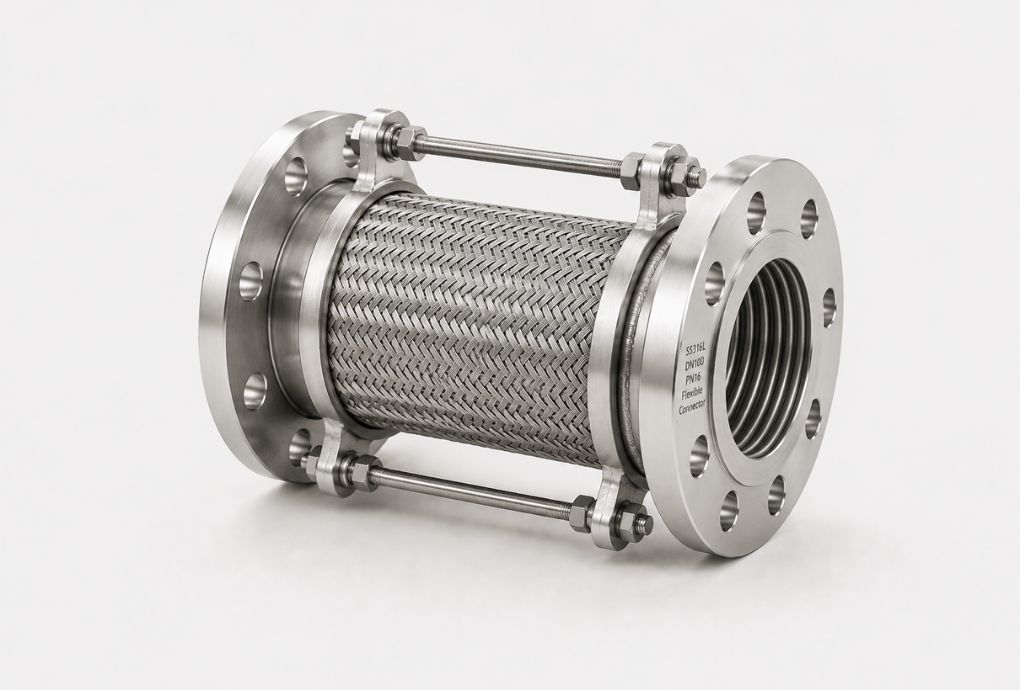
| Metal hose | Skids / routing | Flex routing | Fitting / flange | Vibration focus |
Connections
Connections & Hardware That Fit the Plant
Flange standards
ASME, EN, and project-specific drill patterns.
Weld ends
Bevel prep matched to pipe schedule and material.
Tie rods / hinges
Control pressure thrust where required.
Liners & covers
Flow liners and protective covers for abrasive or external risk.
Movement
Define the Movement Envelope Early
Thermal growth
Calculate from length, material, and ΔT — then size axial capacity.
Equipment offset
Lateral capability for skid and nozzle misalignment.
Vibration
Elastomer or hose where dynamic isolation matters.
Anchors & guides
We help verify the support scheme with your layout.
Applications
Where Pipe Expansion Joints Earn Their Keep
Pipe expansion joints protect steam mains, pump skids, heat exchanger nozzles, and utility piping where growth, vibration, or installation offset would otherwise load fixed equipment.
- Steam distribution
- Pump & compressor skids
- Heat exchanger nozzles
- Chilled / hot water
- Chemical transfer
- Oil & gas lines
- District energy
- OEM packaged units
Specify
How Engineers Should Specify
Start with line size, schedule, design P/T, and media — then confirm axial, lateral, and angular movement plus anchor and guide requirements with application engineering.
Line data
Size, schedule, design P/T, and media.
Movement
Axial, lateral, angular — from layout, not guesswork.
Supports
Confirm anchors, guides, and thrust control.
Ends & tests
Flange/weld standard plus leak/pressure test plan.
Visual Reference
Pipe Expansion Joint Mosaic
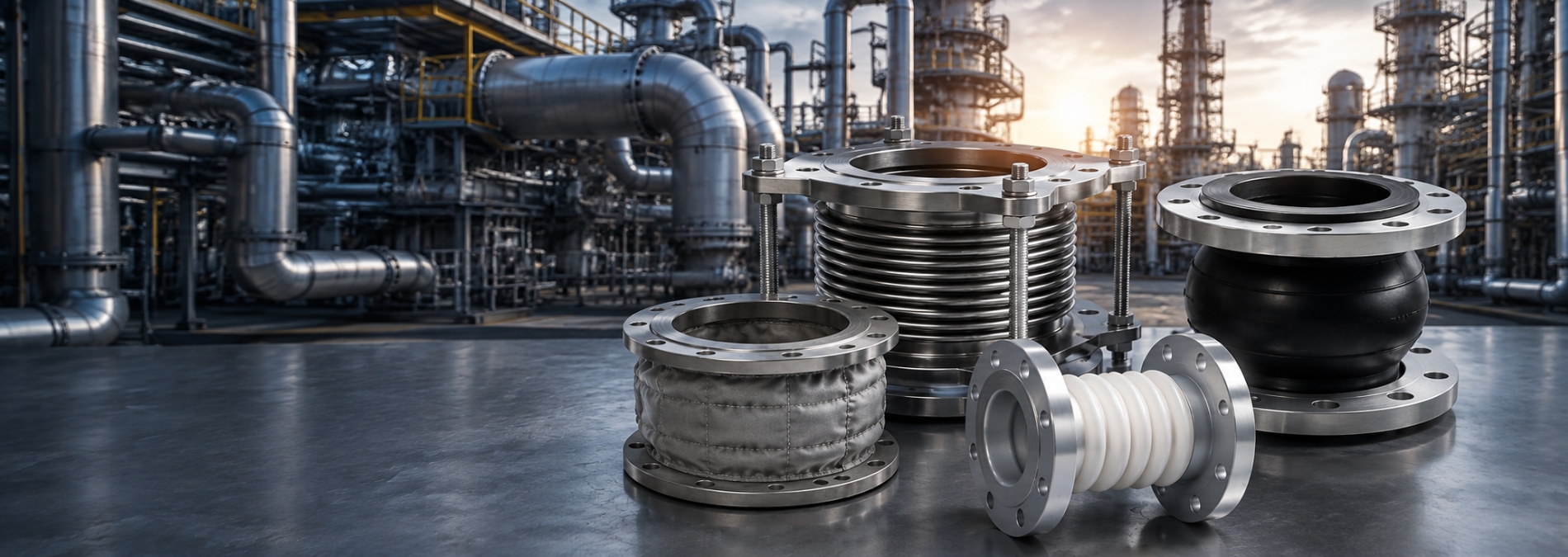
Pipe stress starts at the nozzle — size the joint before the outage.
Send isometric, P/T, media, and movement assumptions for a manufacturer recommendation.
Manufacturer
In-House Control from Material to OQC
FLEXIONEX is a manufacturer. Forming, welding, assembly, and testing stay under one process system — with ISO-aligned incoming, in-process, and outgoing checks against your drawings.
- Application engineering before production
- Material traceability on request
- Pressure / leak testing as agreed
- Prototype and OEM multi-lot programs
Cases
Field Results
Metal bellows with liners replaced leaking slip joints — cleaner thermal growth control.
Steam main retrofit — FLEXIONEX project teamRubber connectors cut vibration transmission into building structure.
Chiller pump skids — FLEXIONEX project teamPTFE expansion joints solved elastomer swell after media change.
Acid transfer line — FLEXIONEX project teamHow It Works
From Inquiry to Shipment
A clean path that keeps engineering, QA, and delivery aligned — especially when outage dates are fixed.
Send RFQ pack
Drawing, media, P/T, movement, ends, quantity, delivery window.
Engineering reply
Construction recommendation, clarifications, and commercial quote.
Approve and build
Freeze design, run IQC–IPQC, assemble and test to the ITP.
OQC and ship
Outgoing inspection, docs pack, export packing, install guidance.
FAQ
Questions Buyers Ask Before They Inquire
Pipe expansion joint vs expansion loop?
Loops need space. Joints save space and control forces at equipment — especially near pumps and vessels.
Metal or rubber on process pipe?
Metal for higher P/T; rubber for vibration and modest thermal duty within elastomer limits.
Do you need a pipe stress model?
Helpful but not mandatory for first RFQ — share isometric, P/T, media, and movement assumptions.
Can you match existing bellows?
Yes, from drawing or sample, including outage replacements.
Lead time?
Depends on size, alloy, and testing. We confirm dates with your inquiry.
What kills pipe joints early?
Missing guides, ignored lateral movement, and media/temperature mismatch.
Request a Quote
Send the Data. Get a Manufacturer Answer.
Complete packs get faster, more accurate quotes. Incomplete packs get clarifying questions — still better than a wrong shipment.
- Drawing or sketch of ends and dimensions
- Media / chemistry and design temperature
- Design pressure or vacuum
- Axial / lateral / angular movement
- Quantity and required delivery window
Attach drawings or photos when emailing — our application engineering team responds with a clear recommendation.