
Industrial Expansion Joints
Industrial Expansion Joint Systems Engineered for Critical Piping
FLEXIONEX designs and manufactures industrial expansion joint systems that absorb thermal growth, vibration, and misalignment — so your piping and ducting stay online under real plant conditions.
The Cost of Guesswork
Wrong Joint Selection Costs More Than a Datasheet Error
Generic catalog picks fail when peak temperature, dew point, or movement vectors are ignored. Unplanned shutdowns, flange leaks, and nozzle overload are the expensive result.
Thermal growth ignored
Anchors and equipment nozzles take the load the joint should have absorbed.
Media mismatch
Elastomer or metal selected without chemistry and dew-point review fails early.
Movement under-specified
Axial-only specs miss lateral and angular demand in real layouts.
No test trail
Shipments without agreed IQC/IPQC/OQC leave quality disputes unresolved.
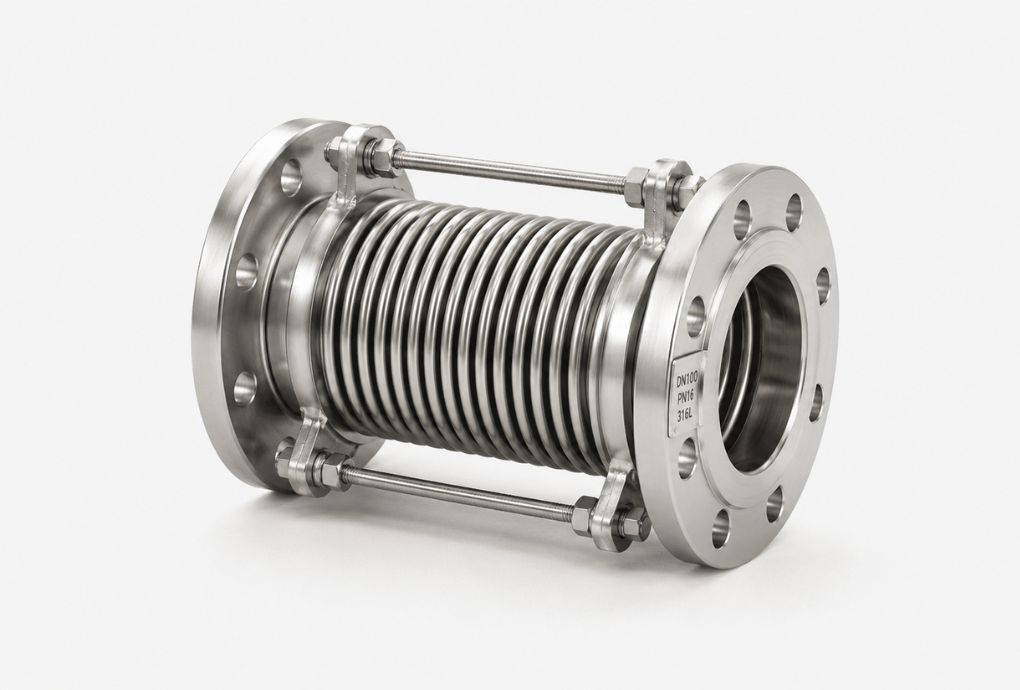
Metal Bellows
High P/T Piping Where Growth Must Be Controlled
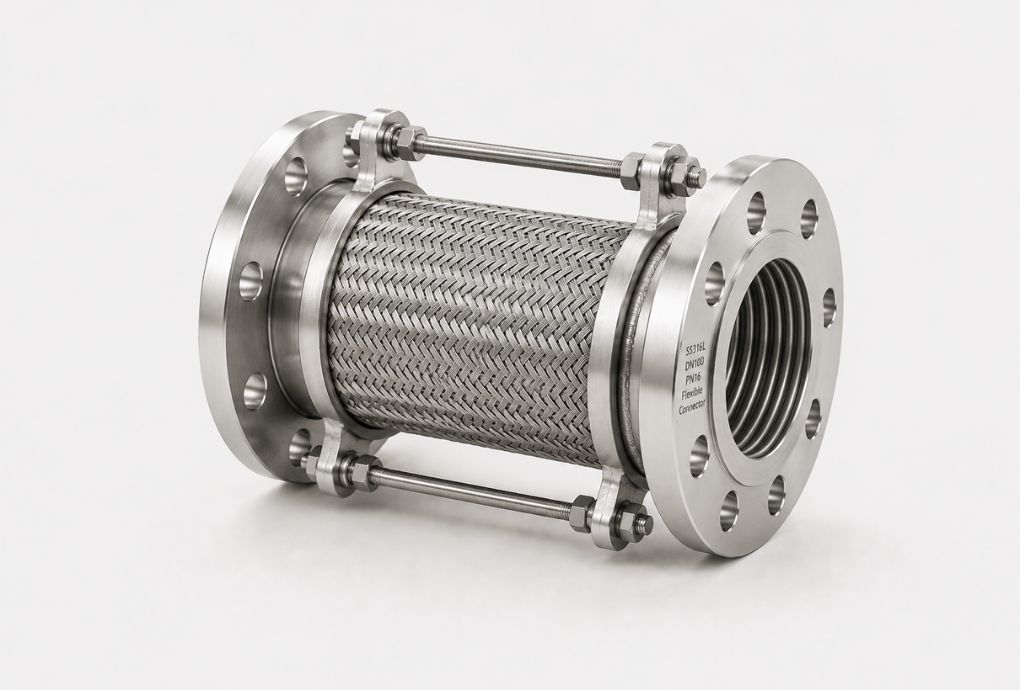
Metal bellows expansion joints handle steam, hot oil, and process lines with defined axial, lateral, and angular capacity — backed by forming, welding, and pressure testing in-house.
Rubber and Fabric
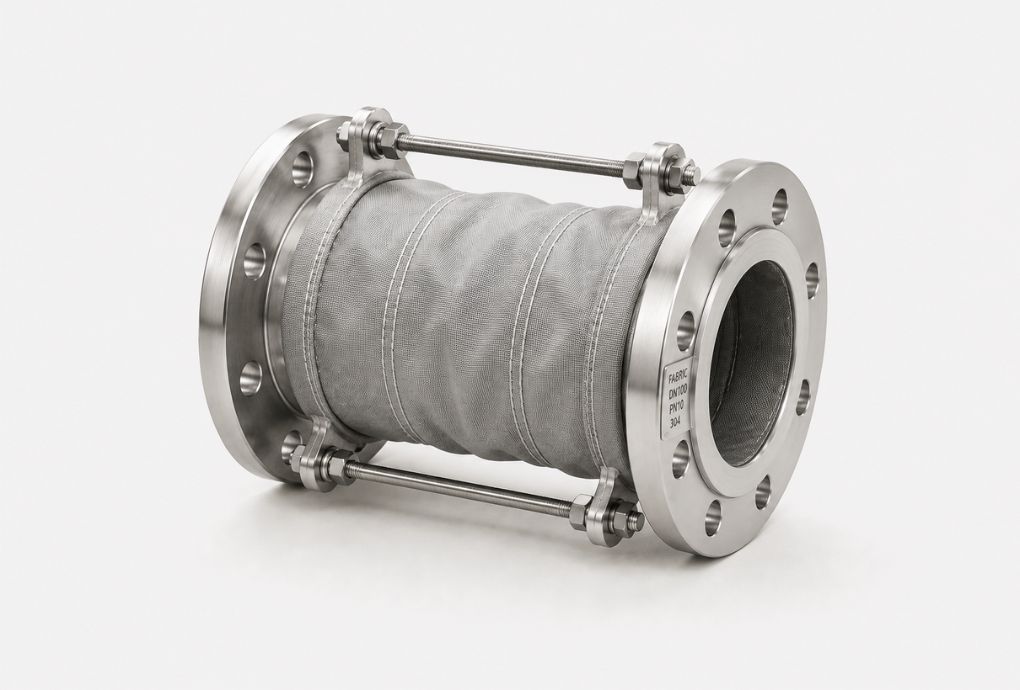
Vibration Isolation and Large Duct Travel
Rubber joints damp pump and HVAC energy. Fabric belts absorb multi-axis movement in flue gas ducts with near-zero spring force — each engineered to media and temperature.
Portfolio
One Manufacturer. Full Industrial Portfolio.
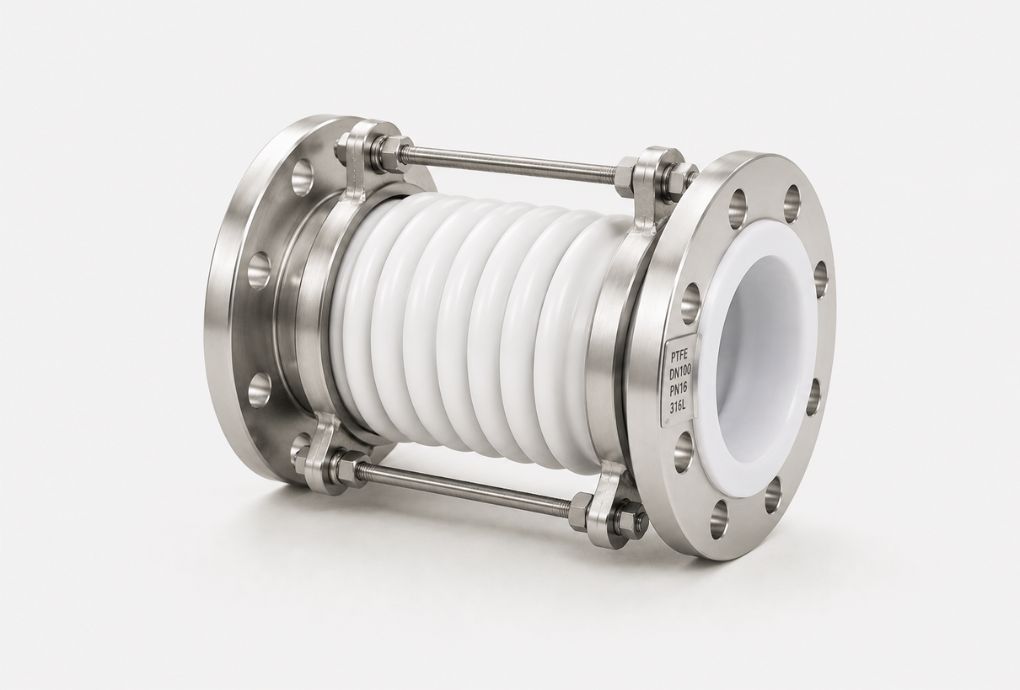
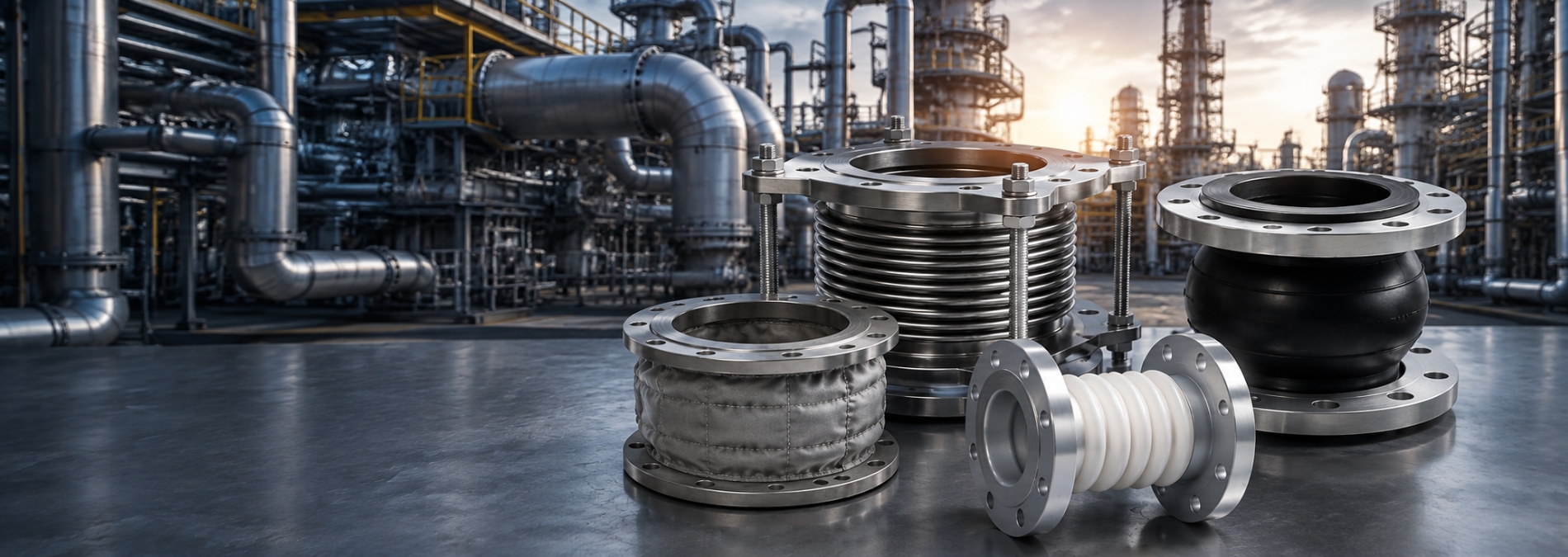
Metal, rubber, fabric, PTFE, and flexible hose — compare families, then open the series that matches your envelope.
Metal Bellows
High pressure and temperature with axial, lateral, and angular movement control.
Learn more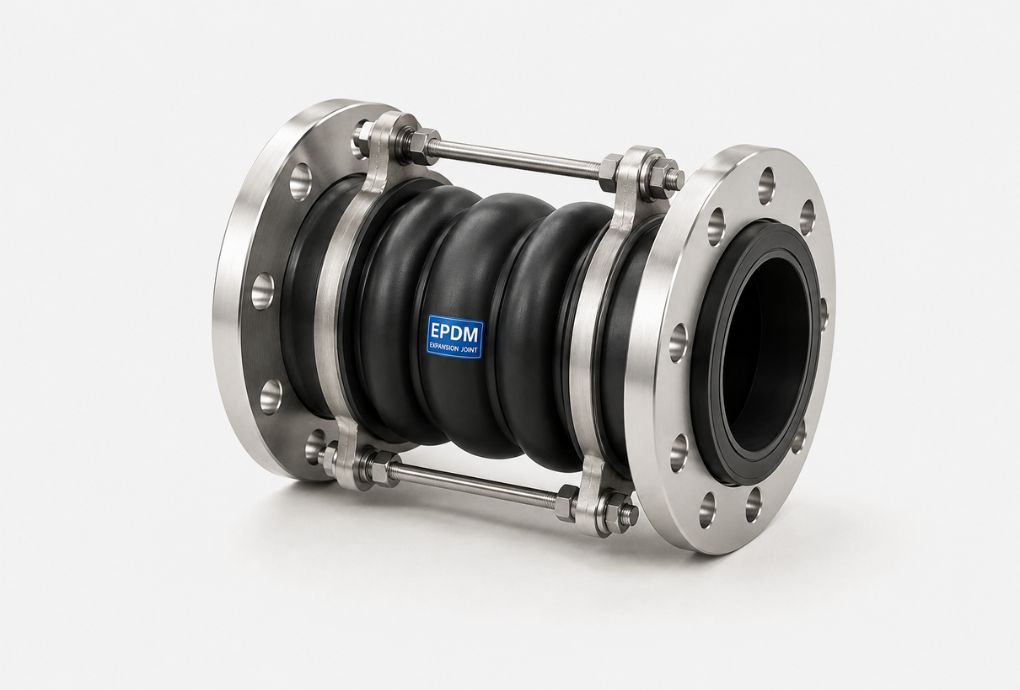
Product Imagery
Industrial Families We Build
Metal, rubber, fabric, PTFE, hose, and factory production — one manufacturer portfolio for critical piping and duct systems.
Compare
Quick Series Comparison
Use this table to shortlist — then confirm ratings on the product page or with application engineering.
| Series | Best for | Temp envelope | Pressure | Spring force |
|---|---|---|---|---|
| Metal bellows | Steam / process piping | High | High | Moderate |
| Rubber | Vibration / HVAC / pumps | Low–mid | Low–mid | Low |
| Fabric | Ducts / flue gas | Very high | Low | Near-zero |
| PTFE | Corrosive chemicals | Mid | Low–mid | Low |
Materials
Materials Matched to Media — Not Guessed from a Catalog
Metals
304 / 316L / Inconel and special alloys for temperature and corrosion.
Elastomers
EPDM, NBR, Neoprene, Viton-class options by fluid and temperature.
Fabrics & films
Glass, ceramic, PTFE/ePTFE barriers sized to dew point and abrasion.
End connections
Flanges, weld ends, and clamp frames to your project standard.
Performance
Movement Capability That Matches Your Layout
Real plants rarely move in one axis. We size to the envelope — not a single catalog checkbox.
Axial
Compression and extension from thermal growth on long runs.
Lateral
Offset between equipment nozzles and fixed pipework.
Angular
Bending where anchors and guides create rotation.
Combined
Real loops rarely move in one axis — we design for the envelope.
Industries
Built for Critical Industries
Industrial expansion joints serve power, petrochemical, district energy, and heavy process plants where thermal growth, vibration, and misalignment must be absorbed without overloading anchors or equipment nozzles.
- Power generation
- Petrochemical & refining
- District energy & HVAC
- Water & wastewater
- Chemical processing
- Marine & LNG
- Cement & steel
- Pulp & paper
Selection Guide
How Engineers Should Specify
Specify continuous and peak temperature, media chemistry, design pressure or vacuum, movement modes, and end connections before selecting metal, rubber, fabric, or PTFE constructions.
Temperature
Continuous and peak — never specify to continuous alone.
Media & dew point
Chemistry and condensate risk decide metal vs elastomer vs PTFE vs fabric.
Pressure / vacuum
Include ID-fan suction and process vacuum with reinforcement needs.
Movement & ends
Axial / lateral / angular plus flange or weld-end standards.
Have a drawing? Get a manufacturer quote — not a reseller delay.
Share media, pressure, temperature, movement, and ends. FLEXIONEX application engineering responds with a clear recommendation.
Manufacturer
In-House Control from Material to OQC
FLEXIONEX is a manufacturer. Forming, welding, assembly, and testing stay under one process system — with ISO-aligned incoming, in-process, and outgoing checks against your drawings.
- Application engineering before production
- Material traceability on request
- Pressure / leak testing as agreed
- Prototype and OEM multi-lot programs
Project Proof
What Teams Report After Install
Metal bellows package matched to thermal growth — reduced flange leakage after outage install.
Power plant piping loop — FLEXIONEX project teamRubber expansion joints cut transmitted vibration after two prior supplier failures.
Pump skid vibration — FLEXIONEX project teamFabric joints engineered for high-temperature duct movement with clear engineering support.
Flue gas duct — FLEXIONEX project teamHow It Works
From Inquiry to Shipment
A clean path that keeps engineering, QA, and delivery aligned — especially when outage dates are fixed.
Send RFQ pack
Drawing, media, P/T, movement, ends, quantity, delivery window.
Engineering reply
Construction recommendation, clarifications, and commercial quote.
Approve and build
Freeze design, run IQC–IPQC, assemble and test to the ITP.
OQC and ship
Outgoing inspection, docs pack, export packing, install guidance.
FAQ
Questions Buyers Ask Before They Inquire
What does FLEXIONEX manufacture?
Industrial expansion joints — metal bellows, rubber, fabric, PTFE, and flexible metal hose — with in-house forming, welding, assembly, and testing.
Manufacturer or trader?
Manufacturer. Core processes stay under one roof with material traceability.
How fast is a quote?
Complete inquiries with drawing and operating data typically receive a clear response within 24–48 hours.
What is MOQ?
Flexible — prototypes and small lots are welcome when specifications are clear.
Which standards do you follow?
Drawings plus agreed practices such as EJMA / FSA design guidance and your project specifications.
Can you match an existing unit?
Yes — from drawings or a physical sample, including outage replacements.
Request a Quote
Send the Data. Get a Manufacturer Answer.
Complete packs get faster, more accurate quotes. Incomplete packs get clarifying questions — still better than a wrong shipment.
- Drawing or sketch of ends and dimensions
- Media / chemistry and design temperature
- Design pressure or vacuum
- Axial / lateral / angular movement
- Quantity and required delivery window
Attach drawings or photos when emailing — our application engineering team responds with a clear recommendation.