
Duct Expansion Joints
Duct Expansion Joints for Flue Gas, HVAC & Large Ducts
Round and rectangular duct expansion joints that absorb thermal movement in flue gas and HVAC ducting — engineered to gas temperature, chemistry, and displacement.
Failure Modes
Duct Joints Fail When Peak Heat and Dew Point Are Ignored
Specifying to continuous temperature alone — or skipping a fluoropolymer barrier below the acid dew point — is how belts crack, leak, and collapse under vacuum.
Peak temperature ignored
Excursions cook outer layers that looked fine on continuous rating.
Acid dew point
Condensate attacks belts without PTFE/ePTFE barrier films.
Vacuum collapse
ID fan suction without anti-collapse reinforcement.
Frame mismatch
Replacement belts that do not fit existing duct frames waste outage time.
Constructions
Bento Grid — Duct Joint Families
Fabric, rubber, PTFE, and metal options sized to gas temperature, chemistry, and displacement.
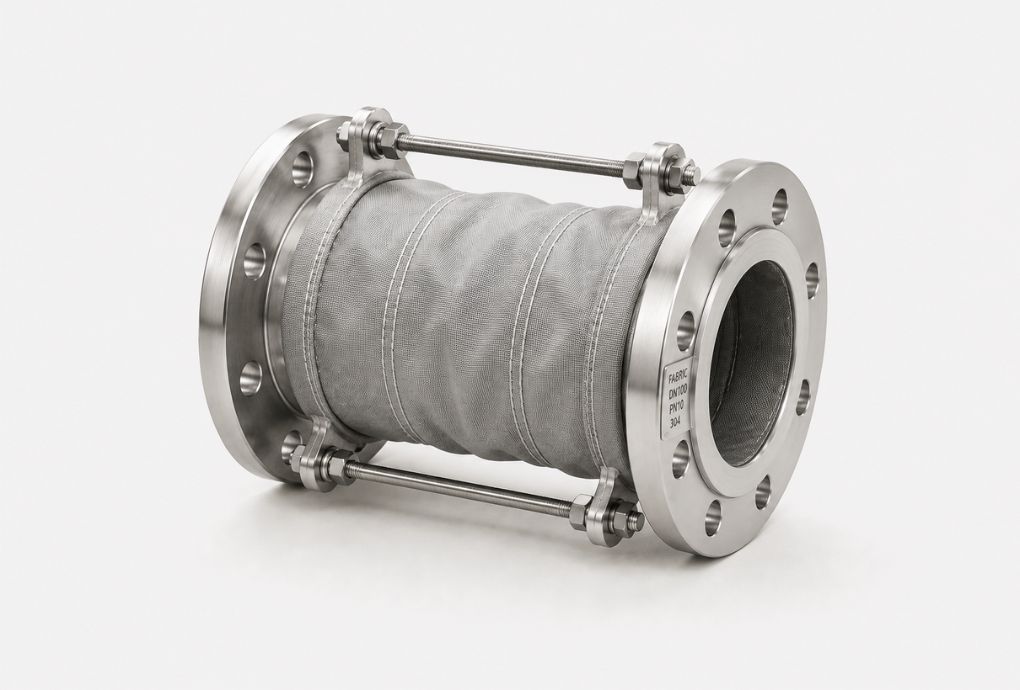
Fabric / Composite Belts
Multi-layer joints for high-temperature ducts
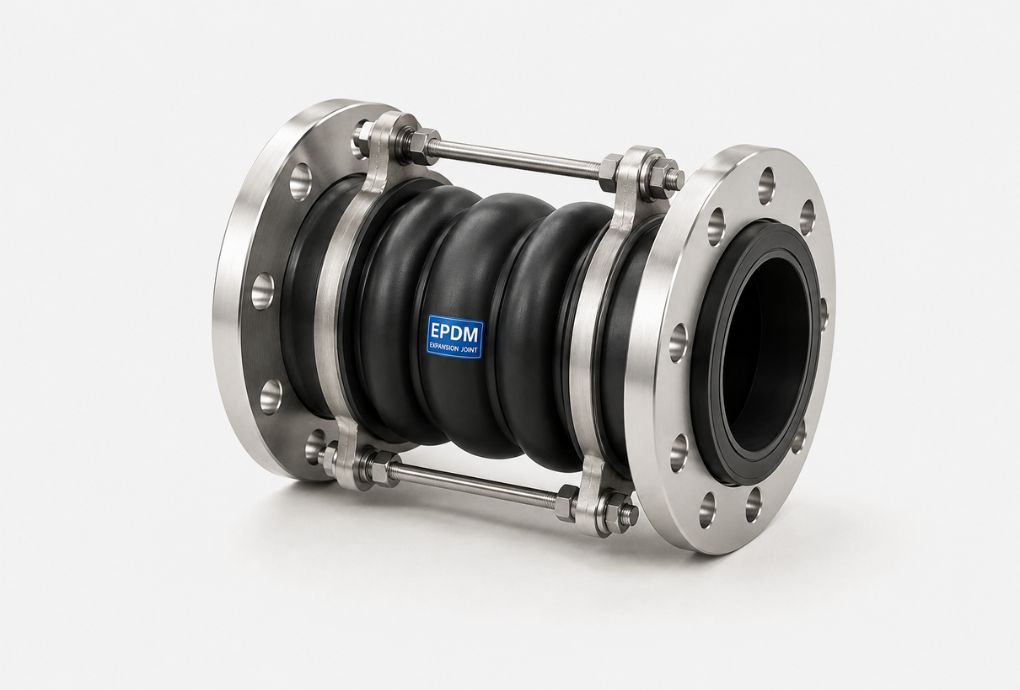
Rubber
Mid-temp HVAC duty
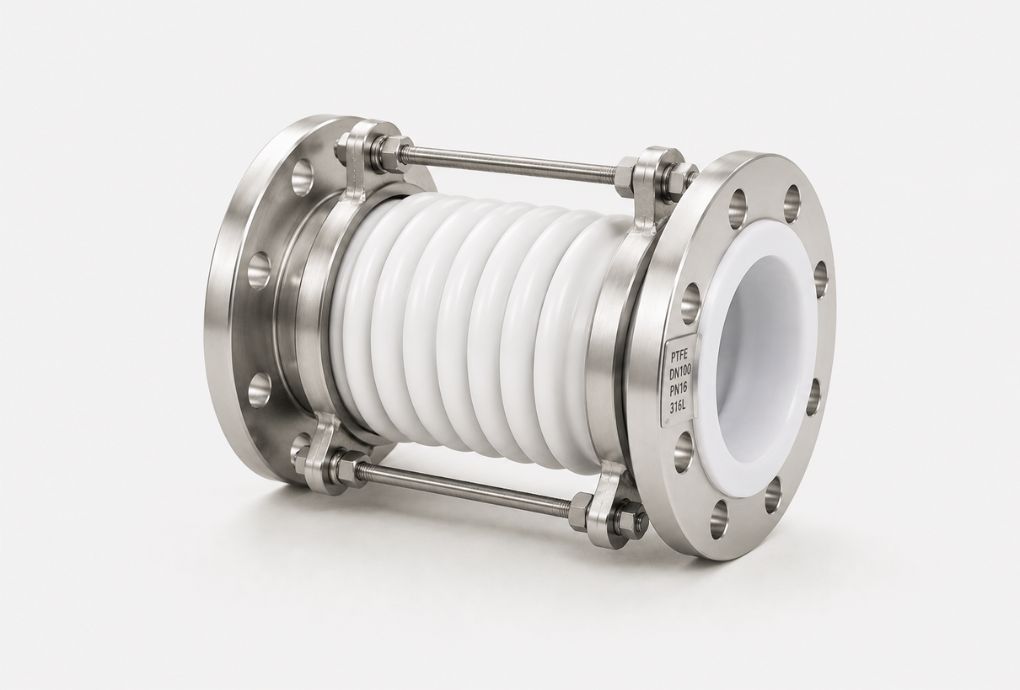
PTFE Barrier
Acid dew-point protection
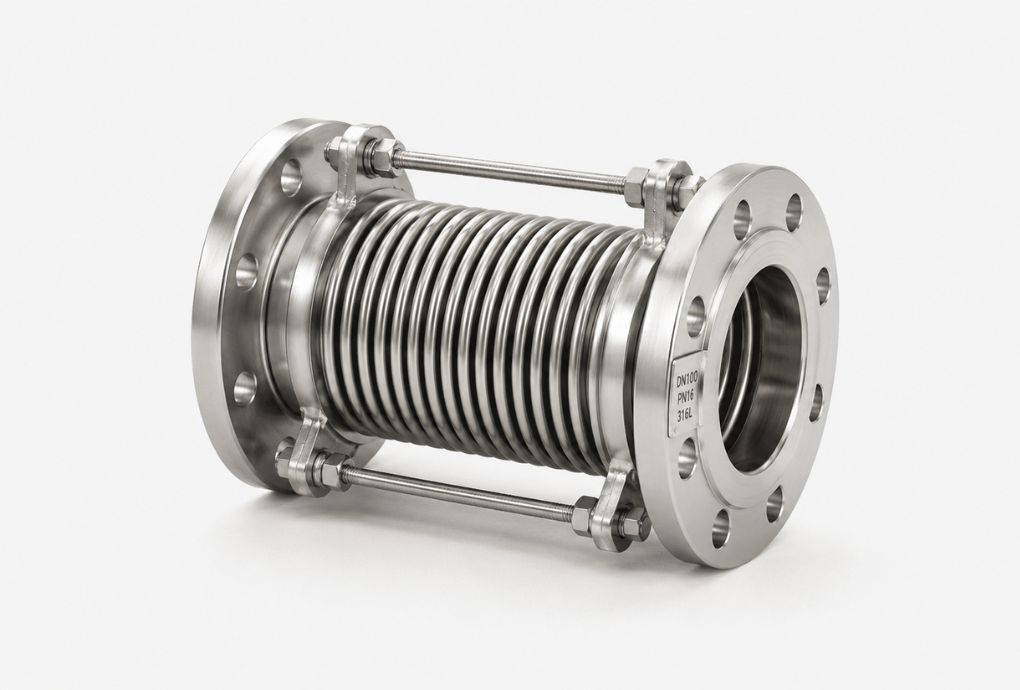
Metal Bellows
Higher pressure round duct

Outage Match
Frame replacement programs
Portfolio
Constructions for Duct & Flue Service
Fabric, non-metallic, and metal options — selected by temperature, chemistry, and pressure.
Fabric / Composite Belts
Multi-layer joints for high-temperature ducts and large multi-axis movement.
Learn more
Outage Replacements
Match existing frames from drawings or samples — fast-track available.
Learn moreLayer Stack
Stacked Media — How Belts Are Built
Cover and Weather Layer
UV, abrasion, and ambient protection for external duct environments.
Barrier Film
PTFE/ePTFE when operating below acid dew point in wet flue gas.
Insulation Pillow
Protects outer layers from peak gas heat during temperature excursions.
Compare
Duct Construction Guide
| Construction | Gas condition | Temp | Shape | Key feature |
|---|---|---|---|---|
| PTFE barrier fabric | Wet acidic flue | ~260°C | Round/rect | Dew-point protection |
| Fiberglass fabric | Dry hot flue | ~550°C | Round/rect | Thermal workhorse |
| Ceramic stack | Extreme heat | 1000°C+ | Round/rect | Peak excursions |
| Metal bellows | Higher pressure | High | Mostly round | Pressure capability |
Materials
Layer Stack Thinking — Not Single-Fabric Thinking
Cover / weather
UV, abrasion, and ambient protection.
Barrier film
PTFE/ePTFE when operating below acid dew point.
Insulation pillow
Protects outer layers from peak gas heat.
Reinforcement
Carries pressure and vacuum loads during movement.
Movement
Movement in Large Duct Systems
Axial growth
Long duct runs between boilers, fans, and stacks.
Lateral / angular
Equipment settlement and thermal racking.
Near-zero spring
Protect duct supports and fan nozzles.
Field splice
Designs that replace without full duct teardown where specified.
Locations
Duct Locations We Support
Duct expansion joints support boiler outlets, air heaters, ID/FD fan ducts, FGD systems, cement kilns, steel dedusting, incineration, and gas turbine exhaust paths.
- Boiler outlet ducts
- Air heater connections
- ID / FD fan ducts
- FGD absorber in/out
- Cement kiln ducts
- Steel plant dedusting
- Waste incineration
- Gas turbine exhaust
Specify
Duct Engineering Checklist
Engineer to continuous and peak gas temperature, composition, dew point, particulate abrasion, pressure or vacuum, and round or rectangular geometry before selecting belt construction.
Gas data
Continuous + peak temperature, composition, dew point.
Particulate
Abrasion level drives cover and pillow design.
Pressure
Positive, low, or negative — reinforce for vacuum.
Geometry
Round/rectangular dimensions and movement schedule.
Peak temperature and dew point belong in the first RFQ — not after the belt fails.
Send gas data, geometry, and movement schedule for a duct joint recommendation.
Manufacturer
In-House Control from Material to OQC
FLEXIONEX is a manufacturer. Forming, welding, assembly, and testing stay under one process system — with ISO-aligned incoming, in-process, and outgoing checks against your drawings.
- Application engineering before production
- Material traceability on request
- Pressure / leak testing as agreed
- Prototype and OEM multi-lot programs
Cases
Duct Projects That Held
PTFE-barrier fabric joint stopped acid condensate attacks that killed prior belts.
FGD absorber inlet — FLEXIONEX project teamAbrasion-resistant cover + insulation pillow extended service life.
Cement kiln duct — FLEXIONEX project teamVacuum-rated reinforcement prevented belt collapse under negative pressure.
ID fan suction — FLEXIONEX project teamHow It Works
From Inquiry to Shipment
A clean path that keeps engineering, QA, and delivery aligned — especially when outage dates are fixed.
Send RFQ pack
Drawing, media, P/T, movement, ends, quantity, delivery window.
Engineering reply
Construction recommendation, clarifications, and commercial quote.
Approve and build
Freeze design, run IQC–IPQC, assemble and test to the ITP.
OQC and ship
Outgoing inspection, docs pack, export packing, install guidance.
FAQ
Questions Buyers Ask Before They Inquire
Fabric or metal for ducts?
Fabric for large displacement and low pressure; metal when pressure demands it.
Rectangular joints available?
Yes — engineered to your duct frame dimensions.
Can you match an existing belt?
Yes, from drawing or sample for outage windows.
Why do fabric joints fail early?
Peak temperature ignored and missing barrier below dew point.
HVAC duct joints?
Supported — often silicone-coated or elastomer constructions for mid-temp service.
Installation support?
Guidance and field support available for critical outages.
Request a Quote
Send the Data. Get a Manufacturer Answer.
Complete packs get faster, more accurate quotes. Incomplete packs get clarifying questions — still better than a wrong shipment.
- Drawing or sketch of ends and dimensions
- Media / chemistry and design temperature
- Design pressure or vacuum
- Axial / lateral / angular movement
- Quantity and required delivery window
Attach drawings or photos when emailing — our application engineering team responds with a clear recommendation.