
Flexible Expansion Joints
Flexible Expansion Joints — Compare Types Before You Specify
A decision hub for flexible expansion joints: metal bellows, rubber, fabric, PTFE, and hose — so you shortlist correctly, then RFQ with confidence.
Category Confusion
“Flexible” Is Not a Spec — It Is a Category
Searchers land here comparing flexibility options. Without a clear matrix, teams overbuy metal or under-spec fabric and lose weeks in resubmittals.
Vague RFQs
“Need flexible joint” without P/T/media forces guesswork quotes.
Over-specified metal
Paying bellows prices where rubber would isolate vibration better.
Under-specified duct
Using piping rubber on high-temp flue gas ducts.
No internal links
Dead-end pages that never route buyers to the right series.
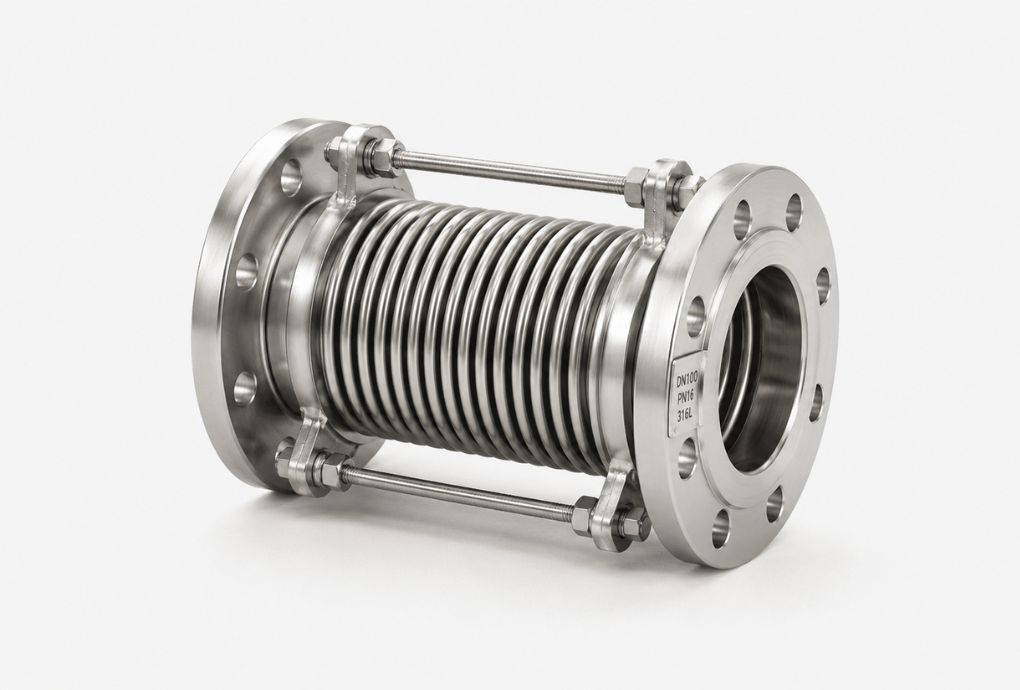
Metal Bellows
Highest P/T With Controlled Movement
Steam, hot oil, and process piping where axial, lateral, and angular capacity must be defined — not guessed from a generic flexible label.
Metal series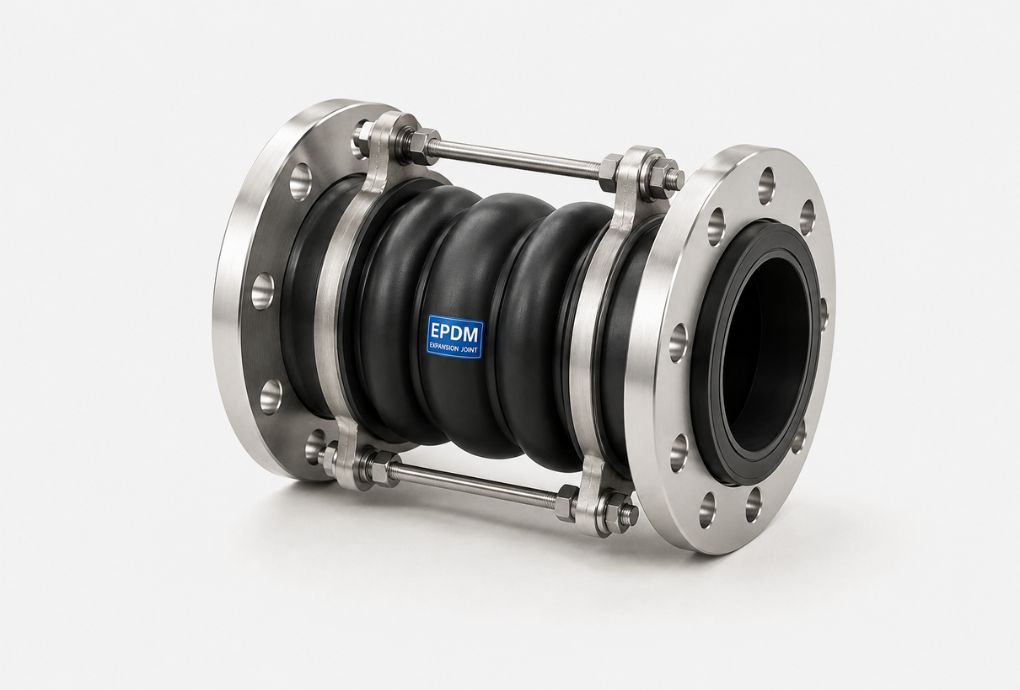
Rubber
Vibration and Noise Isolation
Pump suction and discharge, HVAC, and modest misalignment — where dynamic isolation beats a stiff metal spring.
Rubber series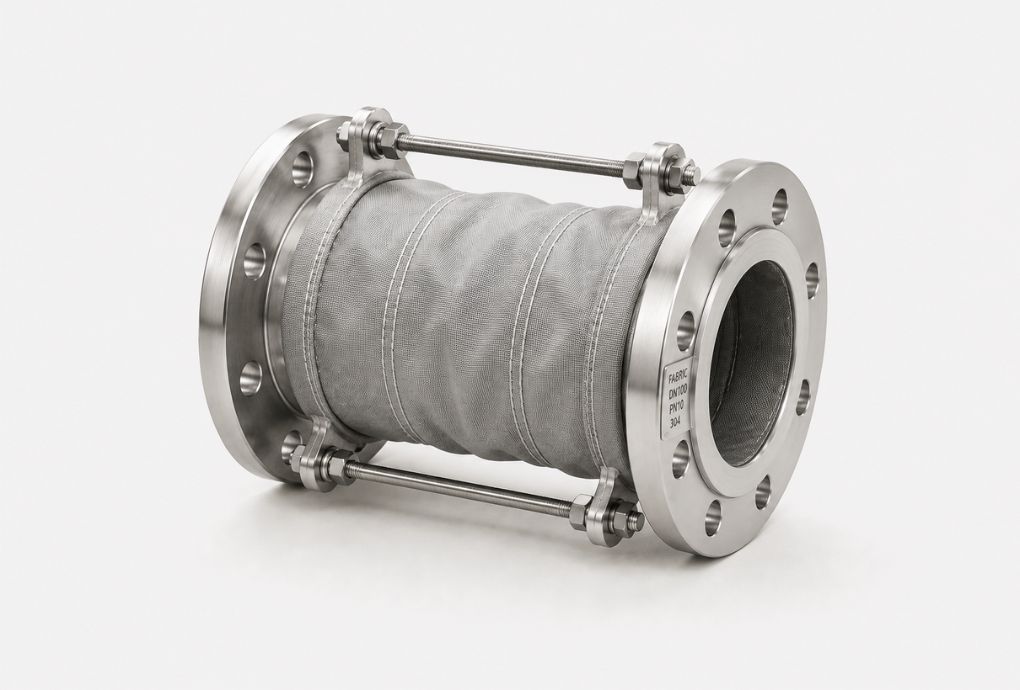
Fabric
Large Duct Travel, Near-Zero Spring
Flue gas and HVAC ducts with multi-axis thermal racking — engineered belt stacks, not piping rubber on hot gas.
Fabric seriesFamilies
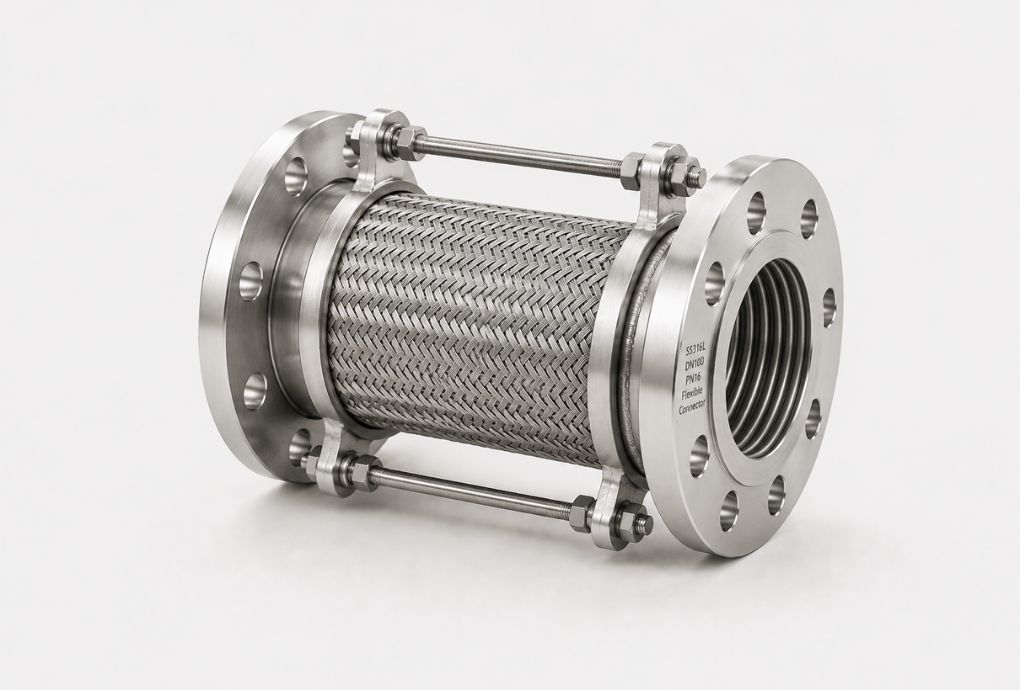
Flexible Joint Families at a Glance
Start here, then open the deep product page for ratings and drawings.
Decision Matrix
Flexibility Decision Matrix
| If you need… | Prefer | Avoid | Go to |
|---|---|---|---|
| High P/T piping | Metal bellows | Standard rubber | Metal page |
| Pump vibration | Rubber | Stiff bellows alone | Rubber page |
| Hot gas duct | Fabric | Pipe rubber | Fabric page |
| Corrosive fluid | PTFE | Wrong elastomer | PTFE page |
| Skid routing | Metal hose | Long bellows | Hose page |
Define
What “Flexible” Still Must Define
Pressure
Flexible does not mean low integrity — rate it.
Temperature
Continuous and peak — always.
Media
Chemistry drives metal vs rubber vs PTFE vs fabric.
Cycle life
OEM programs need fatigue thinking, not one-off installs.
Modes
Flexibility Modes Explained
Axial
Growth along the pipe or duct axis.
Lateral
Offset between centerlines.
Angular
Rotation from settlement or thermal racking.
Dynamic
Vibration and recurring motion — elastomer/hose territory.
Systems
Across Plant Systems
Flexible expansion joints span process piping, utility lines, flue gas ducts, pump connections, OEM skids, HVAC networks, chemical transfer, and marine systems — each with different duty drivers.
- Process piping
- Utility piping
- Flue gas ducts
- Pump connections
- OEM skids
- HVAC networks
- Chemical lines
- Marine systems
Route
Four Steps to the Right Family
Name the primary problem first — thermal growth, vibration, duct heat, or corrosion — then use the decision matrix to route to metal, rubber, fabric, PTFE, or hose before deep specification.
Name the problem
Growth, vibration, duct heat, or corrosion?
Pick the family
Use the matrix above.
Open series page
Confirm ratings and materials.
RFQ
Send drawing + envelope to FLEXIONEX.
Flexible is a category — not a specification.
Name the problem, pick the family, then RFQ with drawing and envelope data.
Manufacturer
In-House Control from Material to OQC
FLEXIONEX is a manufacturer. Forming, welding, assembly, and testing stay under one process system — with ISO-aligned incoming, in-process, and outgoing checks against your drawings.
- Application engineering before production
- Material traceability on request
- Pressure / leak testing as agreed
- Prototype and OEM multi-lot programs

Proof
Better Routing, Fewer Resubmittals
Standardized rubber + hose kit reduced custom one-offs.
OEM skid builder — FLEXIONEX project teamMatrix-led selection cut wrong-metal purchases.
Refinery utilities — FLEXIONEX project teamMoved from piping rubber to fabric after temperature review.
Power duct upgrade — FLEXIONEX project teamHow It Works
From Inquiry to Shipment
A clean path that keeps engineering, QA, and delivery aligned — especially when outage dates are fixed.
Send RFQ pack
Drawing, media, P/T, movement, ends, quantity, delivery window.
Engineering reply
Construction recommendation, clarifications, and commercial quote.
Approve and build
Freeze design, run IQC–IPQC, assemble and test to the ITP.
OQC and ship
Outgoing inspection, docs pack, export packing, install guidance.
FAQ
Questions Buyers Ask Before They Inquire
What is a flexible expansion joint?
Any expansion joint designed to absorb movement flexibly — metal, rubber, fabric, PTFE, or hose — selected by duty.
Is this a product or a hub?
A hub. Product pages carry deep specs; this page routes you correctly.
Can one joint do everything?
No — that myth causes failures. Match family to duty.
Where do I download catalogs?
Request by industry and type via contact — we send the relevant pack.
Do you manufacture all types?
Yes — multi-material portfolio under one manufacturer.
Next step after reading?
Open the matching product page or send your drawing for a direct recommendation.
Request a Quote
Send the Data. Get a Manufacturer Answer.
Complete packs get faster, more accurate quotes. Incomplete packs get clarifying questions — still better than a wrong shipment.
- Drawing or sketch of ends and dimensions
- Media / chemistry and design temperature
- Design pressure or vacuum
- Axial / lateral / angular movement
- Quantity and required delivery window
Attach drawings or photos when emailing — our application engineering team responds with a clear recommendation.