
Non-Metallic Expansion Joints
Non-Metallic Expansion Joints — Rubber, Fabric & PTFE
When metal is the wrong answer: non-metallic expansion joints in rubber, fabric, and PTFE for corrosion, large duct movement, vibration isolation, and low spring-rate needs.
When Metal Fails
Metal Is Not Always Safer — Sometimes It Is Just Heavier
Forcing metallic bellows into corrosive, low-pressure, or high-displacement duct service creates spring force, corrosion, and cost problems non-metallics were designed to solve.
Corrosion
Process chemistry that attacks common alloys.
Huge duct travel
Displacements metallic bellows cannot economically provide.
Vibration
Need isolation, not a stiff metal spring.
Reaction force
Equipment nozzles that cannot accept high bellows spring rates.
Families
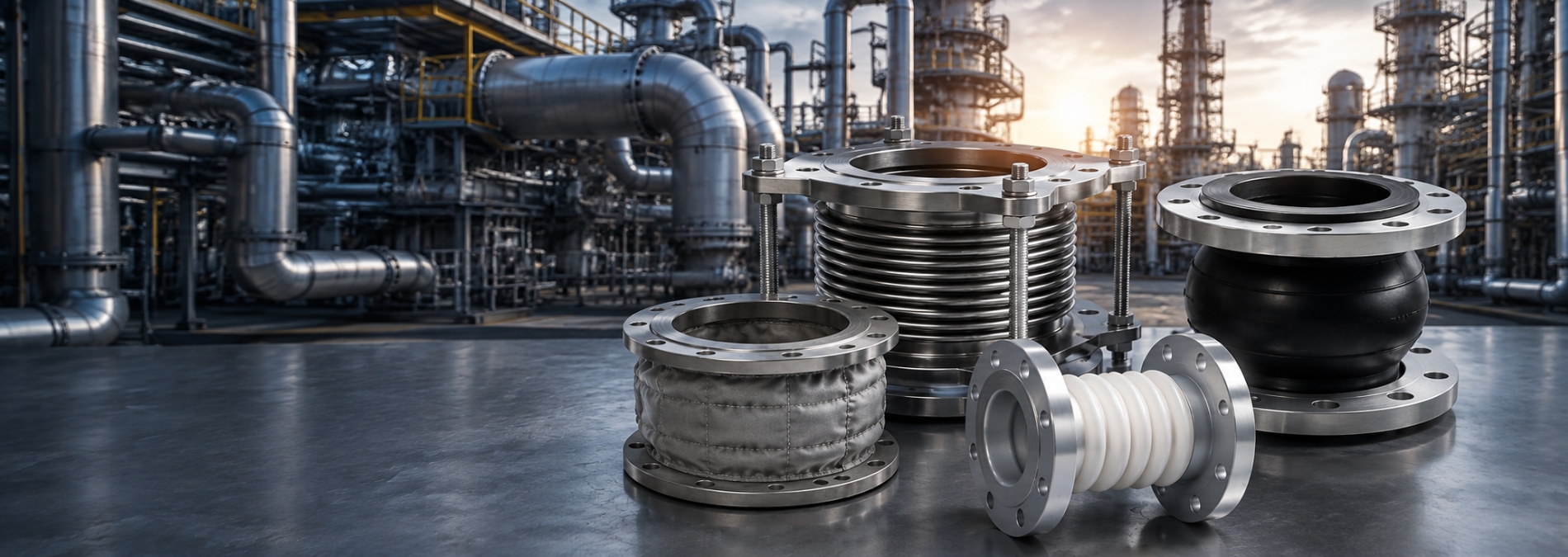
Three Non-Metallic Paths
Rubber for piping vibration, fabric for hot ducts, PTFE for aggressive chemicals.
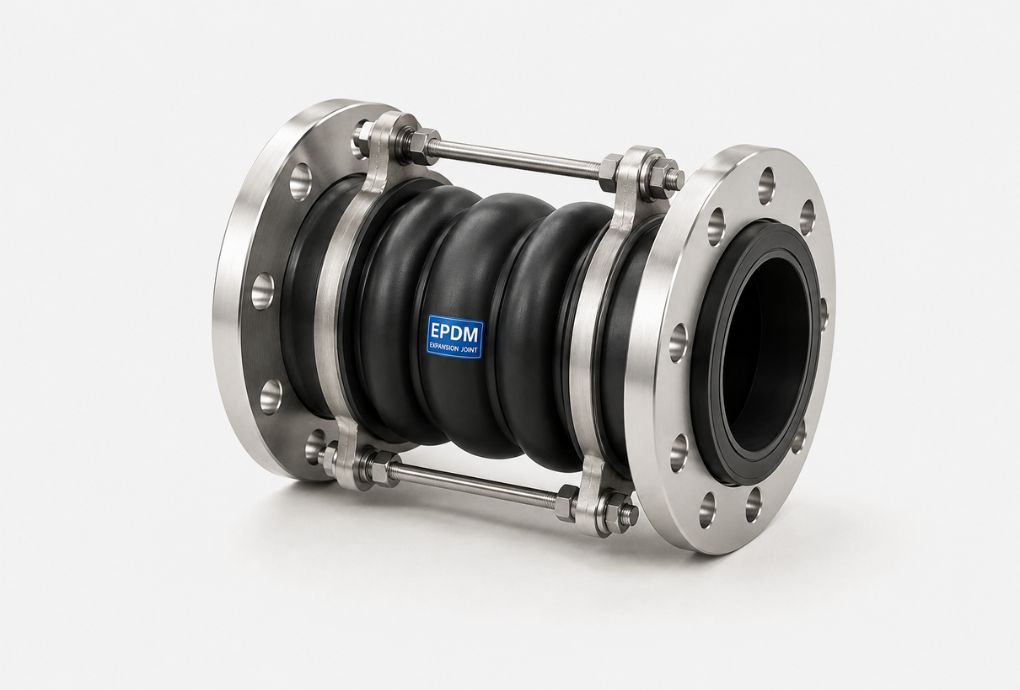
Rubber Expansion Joints
EPDM, NBR, Neoprene and specialty elastomers for piping vibration and misalignment.
Open series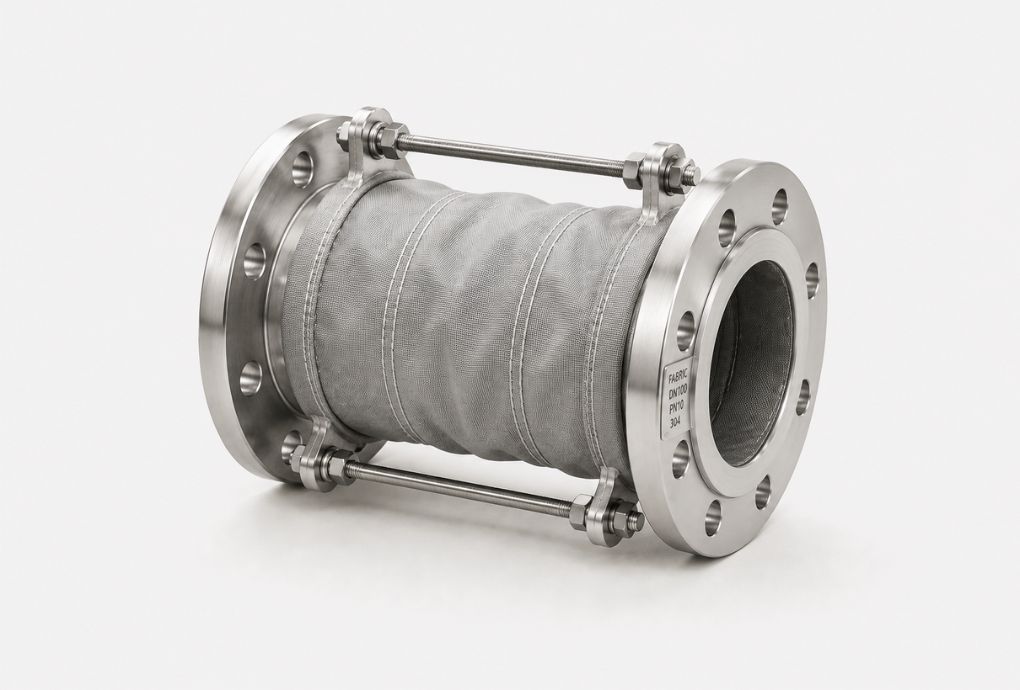
Fabric Expansion Joints
Multi-layer belts for flue gas and large-section ducts with near-zero spring force.
Open series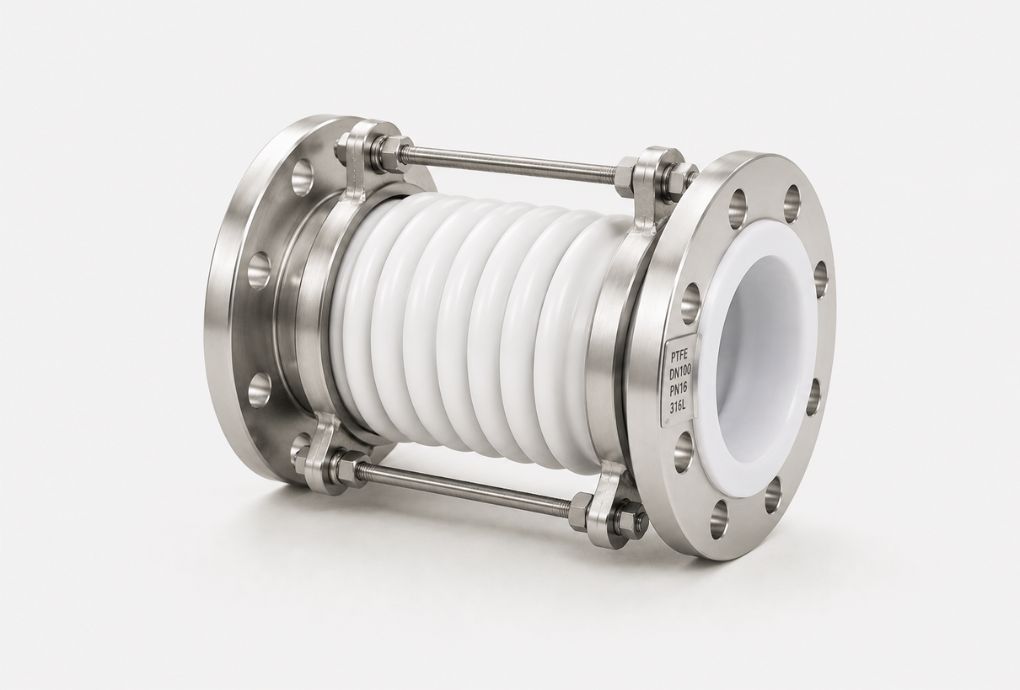
PTFE Expansion Joints
Fluoropolymer solutions for corrosive process fluids and chemical barriers.
Open seriesLow reaction force
Protect weak duct supports and equipment nozzles from stiff metal spring rates.
Chemical barrier
PTFE and elastomer layers keep aggressive media off structural components.
Large displacement
Fabric belts handle duct travel metallic units cannot economically provide.
Vibration isolation
Rubber dampens pump and compressor energy in piping systems.
Full Range
Portfolio Links
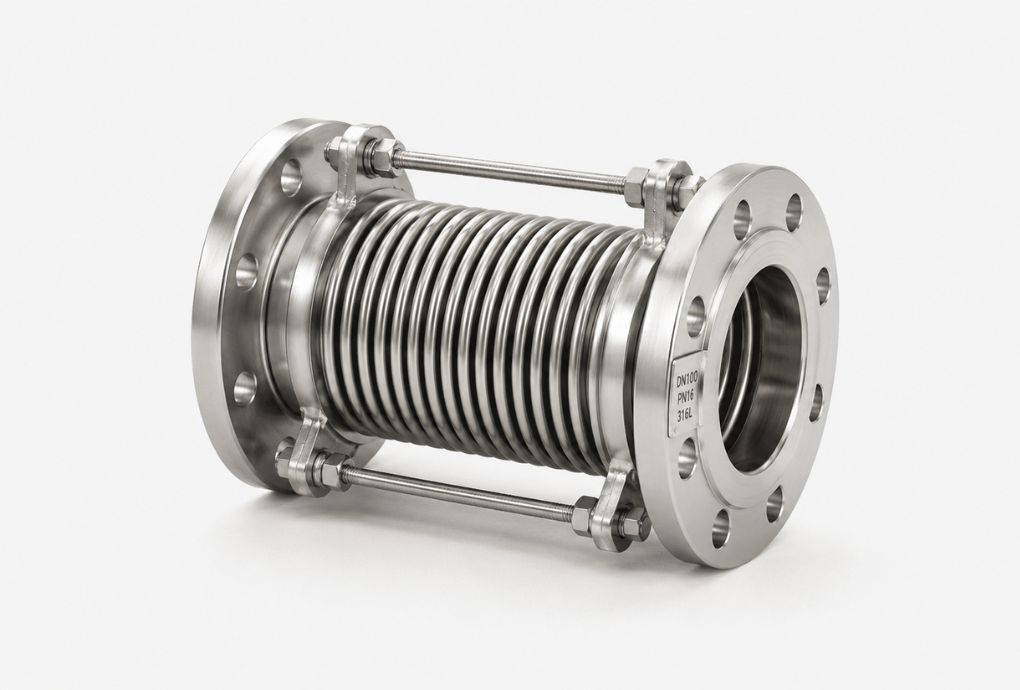
Compare
Non-Metallic Comparison
| Type | Strength | Limit | Typical service |
|---|---|---|---|
| Rubber | Vibration isolation | Temp / chemistry | Pumps, HVAC, process |
| Fabric | Large duct travel | Low pressure | Flue gas, HVAC ducts |
| PTFE | Chemical inertness | Mechanical design | Acids, solvents |
Drivers
Selection Drivers That Matter
Temperature
Continuous and peak — fabric and PTFE differ widely.
Media
Swell, permeation, and condensate risk.
Pressure / vacuum
Reinforce for negative pressure where needed.
Displacement
Duct travel often exceeds piping norms.
Performance
Performance Without Metallic Spring Rates
Low reaction
Protect weak duct and equipment supports.
Multi-axis duct
Fabric belts handle complex thermal racking.
Dynamic isolation
Rubber dampens pump and compressor energy.
Chemical barrier
PTFE keeps aggressive fluids off structural layers.
Sweet Spots
Non-Metallic Sweet Spots
Non-metallic expansion joints excel where corrosion, large duct displacement, vibration isolation, or low spring-force requirements make metallic bellows the wrong economic and mechanical choice.
- Corrosive chemical lines
- Flue gas ducts
- FGD systems
- Pump connections
- HVAC flexible joints
- Lined piping
- Incineration ducts
- Water treatment
Specify
Non-Metallic Selection Path
Rule out metal when chemistry, travel, or isolation dominate — then choose rubber for piping vibration, fabric for hot ducts, or PTFE for aggressive fluids and confirm ratings on the series page.
Rule out metal?
If corrosion, huge travel, or vibration dominate — stay non-metallic.
Pick sub-type
Rubber / fabric / PTFE via the matrix.
Confirm ratings
Open series page for full data.
RFQ
Send media + movement + ends.
Metal is not always safer — sometimes it is just heavier.
Share media, temperature, displacement, and vacuum data for a non-metallic recommendation.
Manufacturer
In-House Control from Material to OQC
FLEXIONEX is a manufacturer. Forming, welding, assembly, and testing stay under one process system — with ISO-aligned incoming, in-process, and outgoing checks against your drawings.
- Application engineering before production
- Material traceability on request
- Pressure / leak testing as agreed
- Prototype and OEM multi-lot programs
Cases
Where Non-Metallics Won
PTFE joints replaced failing alloy bellows after chemistry change.
Acid line conversion — FLEXIONEX project teamFabric joints solved large thermal movement metallic units could not.
Boiler duct — FLEXIONEX project teamRubber connectors cut vibration into concrete structure.
Intake pump — FLEXIONEX project teamHow It Works
From Inquiry to Shipment
A clean path that keeps engineering, QA, and delivery aligned — especially when outage dates are fixed.
Send RFQ pack
Drawing, media, P/T, movement, ends, quantity, delivery window.
Engineering reply
Construction recommendation, clarifications, and commercial quote.
Approve and build
Freeze design, run IQC–IPQC, assemble and test to the ITP.
OQC and ship
Outgoing inspection, docs pack, export packing, install guidance.
FAQ
Questions Buyers Ask Before They Inquire
When to choose non-metallic?
Corrosion, large duct displacement, vibration isolation, or low spring-force needs.
Rubber vs fabric vs PTFE?
Rubber piping vibration; fabric hot ducts; PTFE aggressive chemicals.
Vacuum capable?
Yes with proper reinforcement — critical on fan suction.
Can they replace metal 1:1?
Not always — pressure and temperature ceilings differ. We confirm.
Fire / external exposure?
Discuss covers and plant fire specs during engineering review.
How to start?
Share duty data or jump to the matching product page linked above.
Request a Quote
Send the Data. Get a Manufacturer Answer.
Complete packs get faster, more accurate quotes. Incomplete packs get clarifying questions — still better than a wrong shipment.
- Drawing or sketch of ends and dimensions
- Media / chemistry and design temperature
- Design pressure or vacuum
- Axial / lateral / angular movement
- Quantity and required delivery window
Attach drawings or photos when emailing — our application engineering team responds with a clear recommendation.